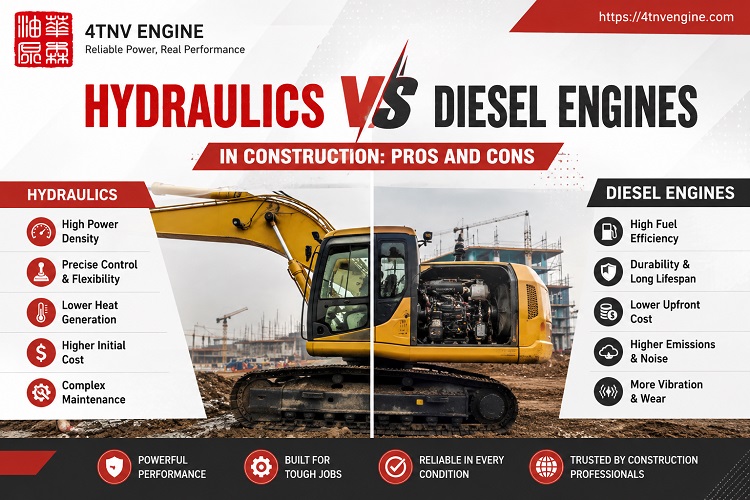
Hydraulics vs Diesel Engines in Construction: Pros and Cons
When choosing a construction machine, one of the most common questions is whether to go with hydraulics or diesel power. The truth is, they’re not competitors. They are partners. A diesel engine produces power, and the hydraulic system converts that power into the force you see on every job site, lifting, digging, and pushing. The global diesel engine market is expected to reach 248 billion dollars by 2026, and construction equipment is one of the major areas of application for diesel engines. These engines must also keep up with increasing product demands, from smaller engines in urban applications to larger engines in mining and infrastructure applications. It is useful to be familiar with how both work together, where diesel power excels and where it doesn’t, and how to make an informed purchase decision before selecting new machinery or planning a fleet upgrade.
How Diesel Engines Power Hydraulic Systems on the Job Site
Most heavy equipment, such as excavators, dozers, cranes, and wheel loaders, operates on the same basic configuration. A mechanical diesel engine burns fuel and generates mechanical energy. This energy is passed through a hydraulic pump, which pressurizes the hydraulic fluid and causes the pistons and cylinders to move arms, buckets, and blades. Without the engine, the hydraulic system has no power source to operate. Remove the hydraulics, and the engine can’t guide its power into the controlled, precise movement.
Smaller versions that are powered by diesel engines, such as compact models in mini excavators and skid steers, work on the same premise but at a smaller scale. This pairing has been used for decades on job sites and continues to be the top choice due to the strong torque they deliver at low engine rpm, which is just what hydraulic pumps require under heavy loads.
Why Diesel Engines Remain the Top Choice for Heavy Equipment
Built for Heavy, Continuous Work
This type of engine provides high torque at low RPM. This steady power output ensures hydraulic pumps operate reliably, even when performing continuous heavy-duty tasks. This kind of consistent power is required in an excavator working through tough earth or a crane carrying heavy steel beams — it is not an occasional power boost but sustained output throughout the operation. This is also why diesel-powered trucks, wheel loaders, and large cranes are still common in mining, where loss of pulling power slows the entire operation.
Better Fuel Efficiency for Long Shifts
They are more fuel efficient than petrol engines, particularly for extended periods of operation. That efficiency directly translates to lower fuel consumption and higher margins for contractors that operate equipment for 10 to 12 hours a day, on every job.
Dependable Power, Even Off the Grid
Many construction sites have no access to reliable electricity. Diesel fuel is easy to transport and store, which means equipment continues to run in remote areas where electric alternatives are not feasible. That is one of the reasons why diesel is still used to power most excavators, loaders, and bulldozers in the world.
Works Across Every Type of Heavy Equipment
From mini excavators to massive mining trucks, diesel power scales up or down to match the job. This versatility is driving manufacturers to develop new models of hydraulic-powered construction equipment across almost every weight class and application.
Where Diesel Engines Fall Short
No power source is trouble-free, and this one has some compromise. Fuel prices have been rising, and costs can add up significantly across a large fleet. Moreover, diesel engines produce higher levels of emissions and particulate matter than electric motors, which is a concern as cities and regions increasingly enforce environmental regulations. In the European Union and the United States, for example, the tougher Tier 4 emission regulations are leading to the development of more efficient engines with reduced particulate emission levels. While there are some additional technology costs, compliant engines are generally built to higher standards, which can contribute to longer equipment service life. To keep one running at its best, regular maintenance is essential, such as oil changes, filter replacements, and fuel system checks.
In addition, contractors should schedule replacements for components like fuel injectors and hydraulic seals to prevent unexpected failures and avoid downtime. Another factor is noise, as diesel equipment is noisier than electric equipment; sometimes this can be a problem if the site is close to residential properties. All of this does not mean that diesel power is a bad option. It is about contractors carefully weighing upfront costs against their long-term operating expenses.
Diesel-Powered Hydraulics vs Electric-Powered Hydraulics
Where and how you work is often the deciding factor in the right choice. Let’s compare and look at how diesel-powered hydraulic equipment and electric-powered hydraulic equipment can differ on the important factors for contractors.
| Factor | Diesel-Powered Hydraulics | Electric-Powered Hydraulics |
| Power source | Diesel fuel, stored on board | Grid power or battery packs |
| Best suited for | Remote sites and heavy, continuous loads | Urban or indoor sites with steady power access |
| Running cost over time | Higher fuel and maintenance cost | Lower running cost, fewer moving parts |
| Noise level | Noticeably louder during operation | Much quieter on site |
| Cold weather performance | Stays reliable in extreme temperatures | Battery output can drop in cold conditions |
| Setup flexibility | Refuel almost anywhere, no cables needed | Needs charging infrastructure on site |
How to Choose the Right Power Source for Your Equipment
Begin by considering your job site conditions. In remote areas, mining sites, or places where power isn’t readily available, diesel engines remain the safer choice. For projects that are predominantly urban, indoor, or located near charging infrastructure, electric-powered hydraulics can help to reduce your long-term costs. Then consider your duty cycle, as heavy, continuous, high-load tasks benefit from the torque and endurance of diesel engines, but lighter or intermittent work may not require the added power. Discuss with your equipment supplier the actual duty-cycle figures from comparable projects, as real figures often reveal more than manufacturer brochures suggest. Consider the total cost of ownership, rather than the price. Diesel equipment is often less expensive at the outset and retains strong resale value, whereas electric systems can come with a higher initial cost for charging infrastructure. Last but not least, consider local emissions laws, as many areas are implementing more stringent restrictions on the use of diesel-powered equipment on construction sites. A clear understanding of your job site, your workload, and your budget will guide you toward the right setup far better than any spec sheet.
Conclusion
Hydraulics and diesel power were never really in competition. One makes the power, and the other makes use of it. The advantages of diesel engines, such as their high torque, fuel efficiency, and reliability throughout the day are still making them the top choice for heavy-duty, remote, and high-load construction applications. Electric options are expanding; however, they rely on charging infrastructure, which most job sites are lacking at this time. For contractors who demand consistent and on-demand power on tough jobs, a well-maintained diesel engine may still be their best bet for now. Looking for a diesel engine that performs in real job site conditions, 4tnvengine (XiaMenJin HuaSen Propulsion System) has reliable, fuel-efficient engines that are built for heavy construction equipment. Contact us today and discover the ideal diesel engine for your next project.
FAQs
What is the main advantage of diesel engines in construction equipment?
The high torque at low RPM helps to ensure steady operation of hydraulic pumps under heavy loads. These make them very suitable for power-intensive tasks and demanding jobsites in non-stop operation.
How long do these engines typically last in heavy machinery?
They can last many years and thousands of operating hours if properly maintained through routine oil changes and filter replacements.
Can hydraulic systems work without a diesel engine?
Yes. However, electric motors can be used in hydraulic systems. The selection will depend on the conditions of the job site, the amount of work required, and the environment.
Is electric power replacing diesel power in construction?
Electric power is increasing in use on construction sites, and diesel power remains the dominant choice in heavy-duty, remote applications where consistent, on-demand power is most important.