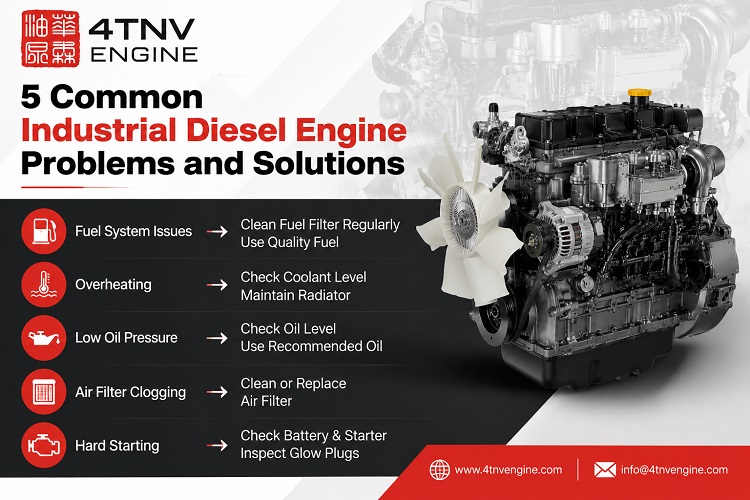
5 Common Industrial Diesel Engine Problems and Solutions
Industrial diesel engines are designed for heavy use. They are the power source for generators, compressors, construction equipment, farm machinery, and heavy transport vehicles daily. But no matter how tough a diesel engine is, it has its share of problems. If the problems are not identified in time, they can escalate very quickly, resulting in engine downtime, which in turn leads to a lot of loss of money, huge repairs, and unproductive work. Actually, the great thing is that most industrial diesel engine problems have predictable signs. Decoding these signs and understanding how to react will definitely help you save not just your time and money but also avoid a lot of unnecessary stress.
Here we discuss the 5 major problems that cause failure of industrial diesel engines and solutions to keep the engine running at its full potential.
1. Engine Overheating
What does it cause?
Overheating is considered one of the main industrial diesel engine malfunction problems that are reported by different industries. It occurs when the engine is not able to get rid of heat at the same speed at which heat is being generated inside the engine.
Common causes include:
- Radiator fins that are blocked and dirty
- Coolant leaking or running low
- Thermostat which is defective and cannot open correctly
- Water pump that is not working properly
- Operation of heavy load in extreme temperatures
How to Fix It
The cooling system should be checked visually first. In particular in dusty environments, the cleaning of radiator fins should be done regularly. Also, checking of the coolant levels and the condition of hoses for cracks and leaks must not be missed. A thermostat must be changed immediately if it is jammed closed. Consider heavy-duty cooling systems that are rated for your operating conditions if your operating environment is at a high temperature. Given that preventive diesel engine maintenance schedules incorporate cooling system inspections at intervals of 250 to 500 operating hours, one can even largely, if not totally, prevent the problem of overheating.
2. Hard Starting or Failure to Start
What Causes It?
A hard start or no-start condition is one of the most frustrating issues an operator can face. The root cause usually falls within a few specific areas.
Here are the main suspects:
- Malfunctioning glow plugs in cold weather
- Air in fuel lines
- Choked fuel filters
- Dead or weak batteries
- Worn piston rings or cylinders causing low compression
How to fix it
Before anything else, test your glow plugs first. When the temperatures are quite low, it is the glow plugs that are worn down that cause the entire diesel engine to struggle. engine hard-start problem: Replace them based on your engine’s recommended operating-hour interval or sooner if they show signs of failure during annual maintenance checks.
Fuel system bleeding should be done to get rid of air, and the replacement of fuel filters must also be done as per the schedule. If the engine compression has become the issue, you can perform a compression test, which will indicate the problem and the next steps necessary for cylinder or piston ring repair.
3. Excessive Black or White Smoke
What causes it
When smoke is a sign of an exhaust problem, the color helps in pinpointing the exact problem.
| Smoke Color | Likely Cause | Severity | Action Required |
| Black smoke | Rich fuel mixture or dirty air filter | Medium | Clean/replace air filter, check injectors |
| White smoke | Coolant leak into combustion chamber | High | Inspect head gasket, check cylinder head |
| Blue smoke | Engine oil burning in combustion | High | Check piston rings, valve seals |
| Grey smoke | Worn injectors or overfueling | Medium | Service or replace fuel injectors |
How to Fix It
Black smoke from the exhaust of a diesel vehicle is most often the first sign of diesel injector issues or of an air filter being so blocked that air is hardly getting through. It is best to first check air filters since changing them is the quickest solution. If there are diesel injector problems, injection should be carried out by taking the injectors to a good test bench. A worn or clogged injector causes fuel wastage and incomplete combustion. Persistent white smoke or blue smoke is not normal during regular engine operation and must be attended to immediately. Both symptoms indicate severe internal problems and, if neglected, can result in major engine failure.
4. Fuel System Issues
What Causes It?
One of the main reasons behind all types of industrial diesel engine performance issues is the diesel fuel system. The system comprises many parts, so any break in the chain from the fuel tank to the injector can end up causing problems.
Common diesel fuel system issues include:
- water contamination in the fuel tank
- clogged or dirty fuel injectors
- fuel lift pump or injection pump failure
- formation of wax in fuel under cold conditions
- sediment and microbial growth in diesel storage tanks
How to Fix It
Select a filter with a high-quality water separator and make sure you drain it regularly. Buying fuel from the most reputable suppliers is the way to go if you want to reduce the risk of contamination. Dirty injectors are a common issue. Professionals can clean them using ultrasonic cleaning for older-style injectors, while modern common-rail injectors require specialized pressure testing and calibration equipment. Replacement is necessary once an injector is heavily damaged. Use of winter-grade diesel or the addition of anti-gel fuel additives to diesel is recommended in cold climates before freezing temperatures occur. Besides that, regular inspection of your fuel storage tanks for sediment and moisture buildup is also very important.
5. Loss of Power and Poor Engine Performance
What Causes It?
Such problems arise because of diesel engine performance issues. An industrial diesel engine with a sluggish response, less power delivery, and poor load handling is the starting point of the diagnosis of the problem.
Several systems may be involved. Here is a list of some likely root causes:
- clogged or dirty air or fuel filters restricting flow
- turbocharger wear or boost leaks
- incorrect valve timing or worn camshaft
- faulty EGR (Exhaust Gas Recirculation) valve
- low engine compression because of worn components
How to Fix It
Initially, try the most basic approach first time around. Replacement of air and fuel filters must be done first, as they are the cheapest items to replace. If you still have the same problem, test the turbocharger to see if the bearing or seal is worn and letting the boost pressure leak out. A diesel engine troubleshooting scan made by using up-to-date diagnostic instruments is capable of extracting the fault codes from the ECU and guiding you directly to the cause of the problem. Mechanical ones require full compression and valve timing checks. Sometimes ignoring deteriorating performance is a mistake. Usually, gradual power loss is a sign of progressive wear, and it is always cheaper to do something about it early rather than wait for a breakdown.
Quick Reference: Diesel Engine Maintenance Intervals
| Component | Check Interval | Service Interval | Notes |
| Engine oil & filter | Daily | Every 250 hours | Use OEM-spec oil grade |
| Air filter | Weekly | Every 500 hours | More often in dusty conditions |
| Fuel filter | Monthly | Every 500 hours | Critical in contaminated environments |
| Cooling system | Weekly | Every 500 hours | Check coolant level and hose condition |
| Injectors | Quarterly | Every 1000–2000 hours | Test and clean or replace as needed |
Conclusion
Industrial diesel engine problems don’t just suddenly happen. Overheating, difficult starting, fuel system issues, excessive smoke, and power loss are some of the problems that easily develop over time, and the symptoms will become quite obvious before they lead to serious breakdowns. Recognizing these symptoms early can save a lot of money and stress caused by unexpected downtime. Maintaining the equipment regularly, getting replacement parts of good quality, and carrying out proper diagnostics are the three essentials for running diesel engines smoothly. Companies following maintenance schedules on a proactive basis also experience fewer failures, longer engine life, and less cost of operations. For diesel engine-related problems like performance, fuel systems, injectors, or engine components, 4tnvengine (XiaMenJin HuaSen Propulsion System) is the industrial solutions provider you can rely on. Reach out to us for your gear’s optimum performance.
FAQs
What are the most common industrial diesel engine problems?
Overheating, hard starting, excessive smoke, fuel system contamination, and loss of engine power are the major problems. Usually, these result from neglecting maintenance or having old parts.
How do I fix diesel engine black smoke?
Black smoke generally indicates a blocked air filter or trouble with diesel injectors. Replace the air filter first and then have the injectors checked, cleaned, and replaced if necessary.
How often should diesel engine maintenance be done?
Simple inspections like checking oil and coolant are supposed to be done every day or week. Overhaul operations, including fuel filter change and injector review, are generally mandatory after 500 to 1000 working hours.
Can diesel engine overheating cause permanent damage?
In fact, continuous overheating results in the distortion of cylinder heads, damage to seals, and even engine breakdown. Fixing cooling system problems early is very important if you want to avoid expensive repairs to your industrial engine.