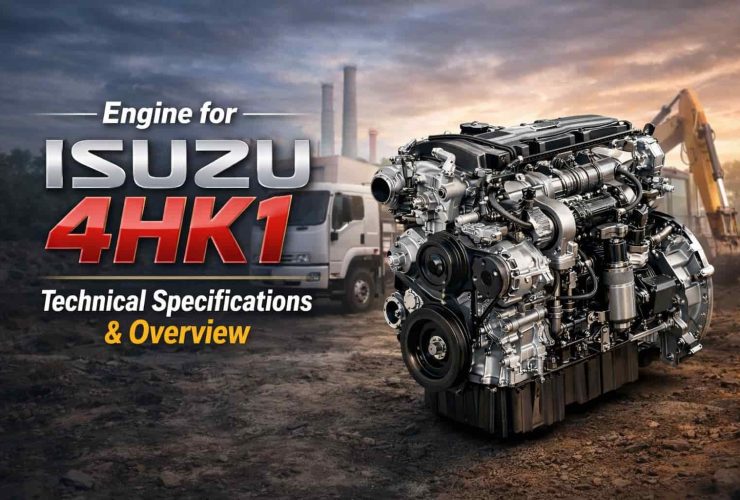
Which is better, Isuzu engines or Cummins engines?
Isuzu engines and Cummins engines each have their own characteristics, making it difficult to simply determine which one is better. The following is a comparative analysis of the two from multiple aspects:
Power Performance
Isuzu Engine: It features strong and stable power output, with mature application of turbocharging technology, capable of providing high torque and power. For instance, the Isuzu 4JJ1 engine can deliver 280 N·m of torque at 1,000 rpm and reach a peak of 380 N·m at 1,800 rpm.
Cummins Engine: Renowned for its powerful performance, it covers a wide range of power requirements from small to large through different series. For example, the Cummins ISF, ISB, ISL, and ISM series can meet the high power demands of heavy-duty trucks, and its exhaust bypass valve design enhances low-speed performance.
Fuel Economy
Isuzu Engine: Equipped with advanced technologies such as high-pressure common rail fuel injection systems, it achieves precise fuel injection control and high combustion efficiency. In light-load transportation scenarios, it shows significant fuel-saving advantages, with some models having a fuel consumption rate 5% lower than similar models per 100 kilometers.
Cummins Engine: With advanced fuel injection systems and efficient combustion technologies, it can effectively control fuel consumption and improve fuel utilization. It performs exceptionally well in terms of fuel economy in the heavy vehicle sector.
Reliability and Durability
Isuzu Engine: Technologically mature and stable, it has undergone rigorous testing and optimization, maintaining stable operation under complex working conditions. Some engines have passed a global 4 million kilometers of strict testing, with no major repairs required within 500,000 kilometers.
Cummins Engine: Known for its outstanding reliability and durability, it has a B10 life of up to 2 million kilometers. The cylinder block and cylinder head adopt an integrated design, reducing leakage issues and having a low failure rate.
Maintenance Cost
Isuzu Engine: It has a relatively good maintenance cost performance, with reasonable prices for parts and repair services. Due to its high reliability, the overall maintenance cost is relatively low.
Cummins Engine: The prices of parts and repair services may be relatively high, but due to fewer parts and a low failure rate, the overall maintenance cost is also relatively low, and the repair time is 50% less than that of similar products.
Emissions and Environmental Protection
Isuzu Engine: It excels in exhaust noise and tail gas emission standards. Through a finely tuned engine system, it ensures complete combustion of fuel in the cylinder, reducing the emission of unburned fuel.
Cummins Engine: It employs advanced emission control technologies, such as cooled exhaust gas recirculation, selective catalytic reduction (SCR), and diesel particulate filters (DPF), ensuring that tail gas emissions meet the world’s strictest emission standards.
Overall, if it is mainly used for heavy cargo transportation and has high power requirements, the Cummins engine is a better choice; if it is for light transportation and emphasizes fuel economy and reliability, the Isuzu engine has more advantages.