Inline vs V Engine: What’s the Difference and Which One Is Better?
Comparing inline vs V engine designs, one wonders which is better and why manufacturers use either of these designs. The answer is relative, as it depends on performance requirements, efficiency targets, vehicle dimensions, and budgets.
This is a guide that simplifies the actual differences between inline vs V engines so that you can make an informed choice whether you are purchasing a car, studying engines, or comparing performance alternatives.
What Is an Engine Configuration?
An engine configuration refers to the arrangement of the cylinders in an engine. This arrangement influences engine performance, its size, and its smooth operation. It also influences fuel efficiency and how costly the engine is to make and maintain.
Engine designs differ; however, today, the most widely used engines are inline and V engines. You will find them in standard passenger cars, SUVs, and performance cars since they offer a good balance of efficiency, power, and reliability.
Inline Engine Explained
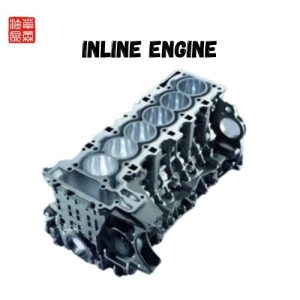 One of the most popular types of engines used in the modern car industry is the inline engine, which is characterized by a simple design and effective performance.
What Is an Inline Engine?
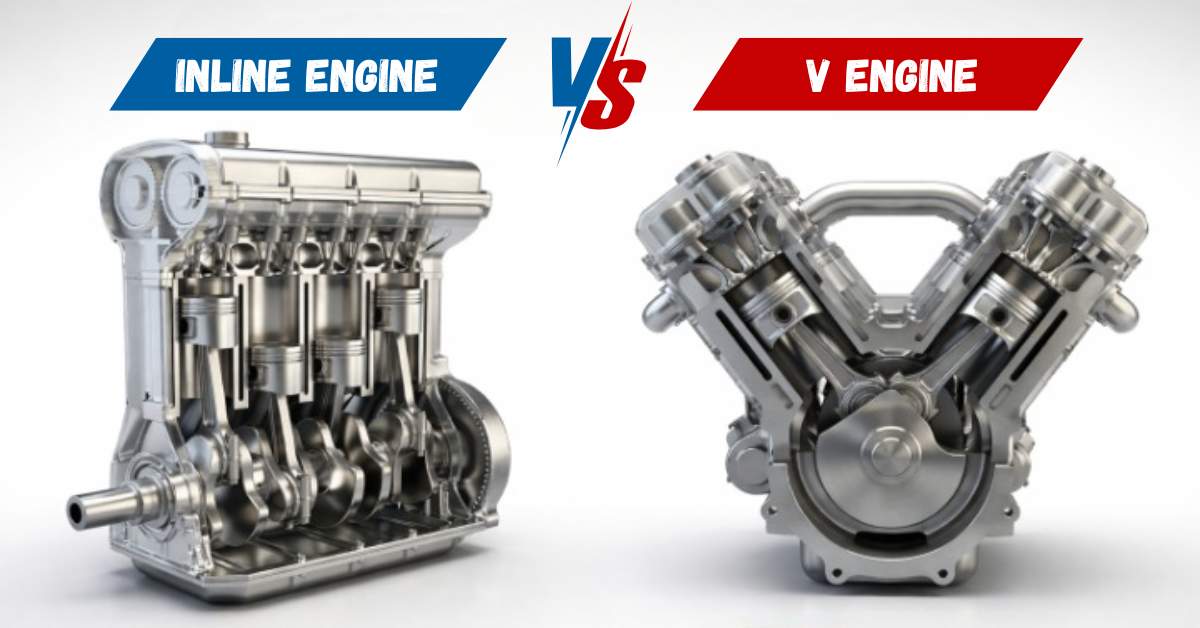
The inline engine also known as a straight engine has all cylinders in a single row connected to a single crankshaft. This design is commonly used since it is simple and effective.
Common inline engine types include:
- Inline-3 (small city cars)
- Inline-4 (most sedans and hatchbacks)
- Inline-6 (luxury and performance vehicles)
Advantages of Inline Engines
Inline engines are popular for practical reasons:
- Less complicated and fewer moving components.
- Reduced manufacturing and maintenance costs.
- Less friction and therefore more fuel-efficient.
- Fluid motion, particularly in inline-6 designs.
Consider an inline engine like a straight bicycle chain, simpler to make and maintain.
Limitations of Inline Engines
Despite their efficiency, inline engines have drawbacks:
- The longer the engine length, the fewer options there are for engine placement.
- Not appropriate when a lot of power is required.
V Engine Explained
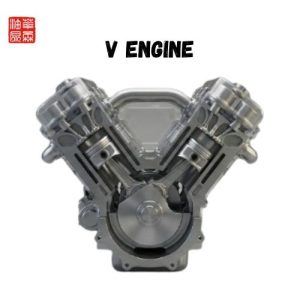 The V engine is designed to deliver more power, and the way the cylinders are set, forming two angled rows makes it popular in performance and heavy-duty cars.
What Is a V Engine?
A V engine positions the cylinders in two banks that are at an angle with each other, with a V shape when viewed from the front. The two banks are similar in that they have a common crankshaft.
Common V engine variants include:
- V6
- V8
- V10
- V12
Advantages of V Engines
V engines are designed for power and compactness:
- Increased output power and torque.
- Short engine length, which gives it better placement.
- Commonly used in sports cars, trucks, and SUVs.
- More appropriate for towing and heavy loads.
Consider a half-folded ladder, this is how V engines save space while adding more power.
Limitations of V Engines
However, this power comes with trade-offs:
- Engineering and components are more complex.
- High repair and maintenance expenses.
- Slightly lower fuel efficiency than inline engines.
Inline vs V Engine: Side-by-Side Comparison
Understanding the differences between inline engine vs v engine becomes easier when you compare their design, performance, and cost side by side.
| Feature | Inline Engine | V Engine |
| Cylinder Layout | Single straight row | Two angled banks |
| Design Complexity | Simple | Complex |
| Fuel Efficiency | Higher | Lower |
| Power Potential | Moderate | High |
| Engine Length | Longer | Shorter |
| Maintenance Cost | Lower | Higher |
Which Engine Is Better?
Choosing between an inline engine vs V engine depends on how you plan to use your vehicle and what matters most to you.
For Daily Driving
Inline engines are most suitable for day-to-day driving, particularly for use in cities and during commuting. They tend to deliver high mileage and therefore save fuel during daily commuting. They are also affordable to own in the long run and are reputed to perform well and reliably.
For Performance and Towing
V engines are favored for strong power requirements. They are quicker in acceleration and they can carry heavy loads more conveniently. This is why they are suitable for trucks, SUVs, and the performance cars which are either used to pull or carry something.
For Cost-Conscious Buyers
Inline engines are usually affordable in general. They are also inexpensive to produce and have fewer components, making them simpler and less costly to repair. Maintenance costs are normally cheaper in the long run than V engines.
For Engine Bay Flexibility
V engines are designed to fit within certain vehicle layouts. They are short in length and this gives the manufacturers the opportunity to make shorter hoods and allow for high-performance designs. That is why a great number of sports cars have V engines.
Real-World Examples
In practical scenarios, the selection of an engine is based on the type of vehicle and its use. Inline-4 engines are fitted in most compact cars as these engines are good in terms of fuel efficiency, lower costs, and everyday reliable performance.
To get smooth power delivery and a luxurious driving experience, luxury sedans usually come with inline-6 engines whereas muscle cars and trucks use V8 engines, which deliver high power and strong torque for performance driving and heavy-duty use.
Conclusion
When evaluating inline vs V engine designs, the better choice depends on your priorities, fuel efficiency, power, cost, or performance. Inline engines dominate everyday vehicles for their efficiency and reliability, while V engines remain the top choice for power-hungry applications.
4TNV Engine helps automotive enthusiasts understand engine technologies so they can make smarter, long-term decisions based on real-world needs.
FAQs
What is the main difference between inline and V engines?
The primary difference lies in cylinder arrangement, inline engines use one straight row, while V engines use two angled cylinder banks.
Are inline engines more fuel-efficient?
Yes, inline engines generally offer better fuel efficiency due to simpler design and lower internal friction.
Why do performance cars use V engines?
V engines deliver higher power and torque while saving space, making them ideal for sports and performance vehicles.
Which engine type is cheaper to maintain?
Inline engines are usually cheaper to maintain due to fewer parts and simpler construction.