
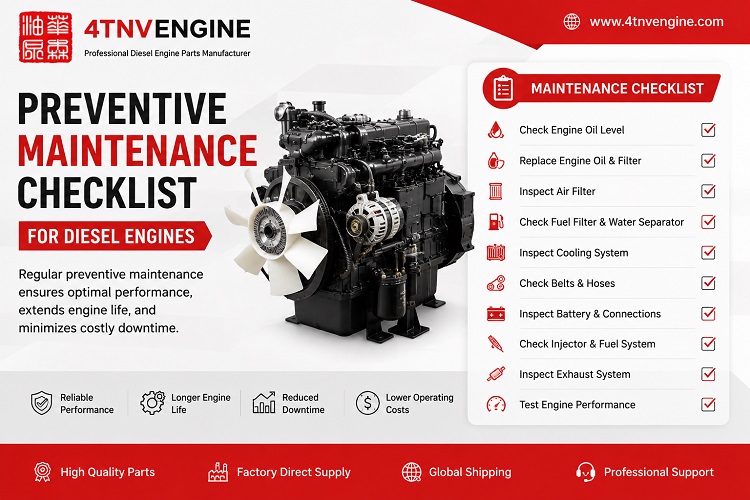
Preventive Maintenance Checklist for Diesel Engines
Diesel engines are workhorses. They are used for heavy-duty equipment, generators, trucks, and industrial machinery all around the world. Even the toughest of engines require regular upkeep, though. If you don’t have a good preventive maintenance program, these little problems become big breakdowns. And in a B2B environment, downtime is never just a mechanical problem. It affects productivity, deadlines, and your bottom line. The good news? Having a well-defined maintenance schedule will help you anticipate issues before they occur. This guide will take you through a practical, easy-to-follow checklist of preventive diesel engine maintenance, ensuring your equipment operates at its best.
Why Preventive Maintenance for Diesel Engines Matters
Regular maintenance may appear to be a time-saving approach. However, the price of not doing anything is always greater than the price of prevention. Maintenance should be viewed as a priority and not an afterthought for businesses using diesel engines. When you follow a proper maintenance schedule, you reduce unexpected breakdowns and avoid costly emergency repairs. This means that your engine will have a much longer lifespan, and you will get a much better return on your investment. Fuel economy increases, and your operating costs go down each day. Your equipment remains up-to-date with emissions rules, and you’re on the correct side of regulation. And most of all, your employees work on safer, more reliable machinery. Diesel engines are built to last. They can be operated for 15,000 to 30,000 hours or more if they are cared for properly. Even top-quality engines can fall short without it.
Complete Preventive Maintenance Checklist for Diesel Engines
Always use this checklist as your standard operating procedure. It includes daily, weekly, monthly, and annual activities that should be performed by every fleet manager, equipment operator, or maintenance team.
| Maintenance Task | Frequency | Why It Matters |
| Engine Oil Check | Daily / Weekly | Prevents wear and overheating |
| Coolant Level Check | Weekly | Avoids engine overheating |
| Air Filter Inspection | Monthly | Maintains fuel efficiency |
| Fuel Filter Replacement | Every 250–500 hrs | Stops contaminants in fuel |
| Belt & Hose Inspection | Monthly | Prevents sudden breakdowns |
| Battery Check | Monthly | Ensures reliable starting |
| Injector Cleaning | Annually | Optimizes combustion |
| Exhaust System Check | Quarterly | Reduces emissions |
1. Daily Checks (Before Every Use)
These are rapid tests that take just a few minutes but can save you from damaging issues. When operating any type of diesel engine, check the engine oil level with the dipstick and the overflow reservoir of the engine for coolant level. Look for any visible leaks underneath the engine. Inspect the air intake for obstructions or damage, and if the engine is electric start, measure the battery voltage. These actions take less than 5 minutes but help identify issues before they become a problem.
2. Weekly Maintenance Tasks
Make a deeper inspection one time per week. Inspect belts, hoses, and the fuel system for cracking and fraying and any fuel system leaks or loose fittings. If necessary, remove dust and dirt from the air filter area, particularly in dusty areas. Check all fluids, such as brake and hydraulic, and check the exhaust for abnormal smoke or odor, as they may indicate problems.
3. Monthly Maintenance Tasks
Inspect the exhaust system in detail at least one time each quarter. Look for any cracks or leaks and any odd discolorations in the exhaust pipes, manifold, and muffler. Make sure that all the mounting brackets and clamps are properly locked in. An abnormal exhaust color – black, white, or blue smoke – may reveal fuel, coolant, or oil problems that should be fixed right away. Dealing with exhaust system problems without delay not only ensures you meet emissions standards but also does no harm to the engine.
4. Every 250 to 500 Operating Hours
This is the major maintenance session that many teams postpone, but it is advisable not to do so. Change the engine oil and oil filter together at this time for best results; both should always be changed simultaneously But oil filters may also be inspected or changed independently during interim checks if required. Replace the fuel filter so that there is no contaminant build-up. If it has deteriorated, flush and replace the coolant. Examine the turbocharger to see if there is any wear or shaft play. Conduct a test on the injectors and clean and/or replace them as needed. In fact, this is why of diesel engine failures.
5. Annual or Major Service Intervals
Have a complete service check by a qualified technician once a year or after reaching significant usage levels. This should encompass a full engine diagnostic scan, inspection and testing of all electrical systems, and valve clearance checking and adjustment if required. Thoroughly inspect the injection pump and fuel delivery system, and flush and refill with fresh coolant throughout the system.
Pro Tips for Better Diesel Engine Care
- Use manufacturer-recommended engine oil and fuel grades to prevent engine damage and warranty claims.
- Keep thorough records of services, such as service dates, replaced parts, and technician information.
- Ensure operators are trained to look for early warning signs that include unusual noises, vibrations, or excessive smoke.
- Be aware of the feedback from the operator, because daily operators may see problems before large failures are experienced.
- Replace parts, such as filters and belts and other engine components, with genuine replacement parts for reliable service and superior performance.
- Don’t use lower-quality aftermarket parts that can lead to higher maintenance expenses in the future.
- Properly store diesel fuel to avoid contamination, moisture, and fuel degradation.
- Regularly check fuel quality, as contaminated fuel is a common cause of diesel engine issues.
Common Maintenance Mistakes to Avoid
- Never neglect minor leaks; small drips can soon become large engine issues.
- Use the recommended oil viscosity for the operating temperatures to minimize engine wear.
- Regularly inspect and change air filters, particularly in dusty or polluted areas.
- Don’t operate the engine with low coolant; otherwise, it is likely to suffer serious overheating damage.
- Change fuel filters as recommended to ensure engine performance and prevent damage to fuel injectors.
- Regularly monitor engine performance indicators — such as unusual noises, smoke color, temperature readings, and fuel consumption — to catch developing problems before they become costly repairs.
- To avoid problems recurring, take these common pitfalls into account as part of a maintenance checklist review process.
- Build awareness among operators and technicians so that long-term engine reliability and efficiency can be improved.
Conclusion
Preventive maintenance is one of the ways to make diesel engines work efficiently for a longer life and achieve an overall lower operating cost. Regular servicing also reduces the chances of any unexpected failures or costly repairs. Vehicles, generators, and heavy machinery that are well-maintained through regular servicing provide better performance for businesses. Regular service ensures equipment reliability, reduces downtime, and promotes overall smooth operations. Search for dependable diesel engine parts and components? Call 4tnvengine (XiaMenJin HuaSen Propulsion System) for quality solutions that can meet engine performance and maintenance requirements for long-term use.
FAQs
How often should diesel engines be serviced?
Generally, diesel engines should be serviced at 250–500 hours of operation, and major inspections should be performed annually.
What are the most common diesel engine maintenance mistakes?
Typical problems involve neglecting to replace oil, fuel, or air filters and not fixing leaks.
How can I extend the life of my diesel engine?
Adhere to a maintenance program, employ good parts and fluids, and prevent significant problems.
What type of oil is best for diesel engines?
Follow the manufacturer’s recommended guidelines for heavy-duty diesel engine oil viscosity for operating conditions.