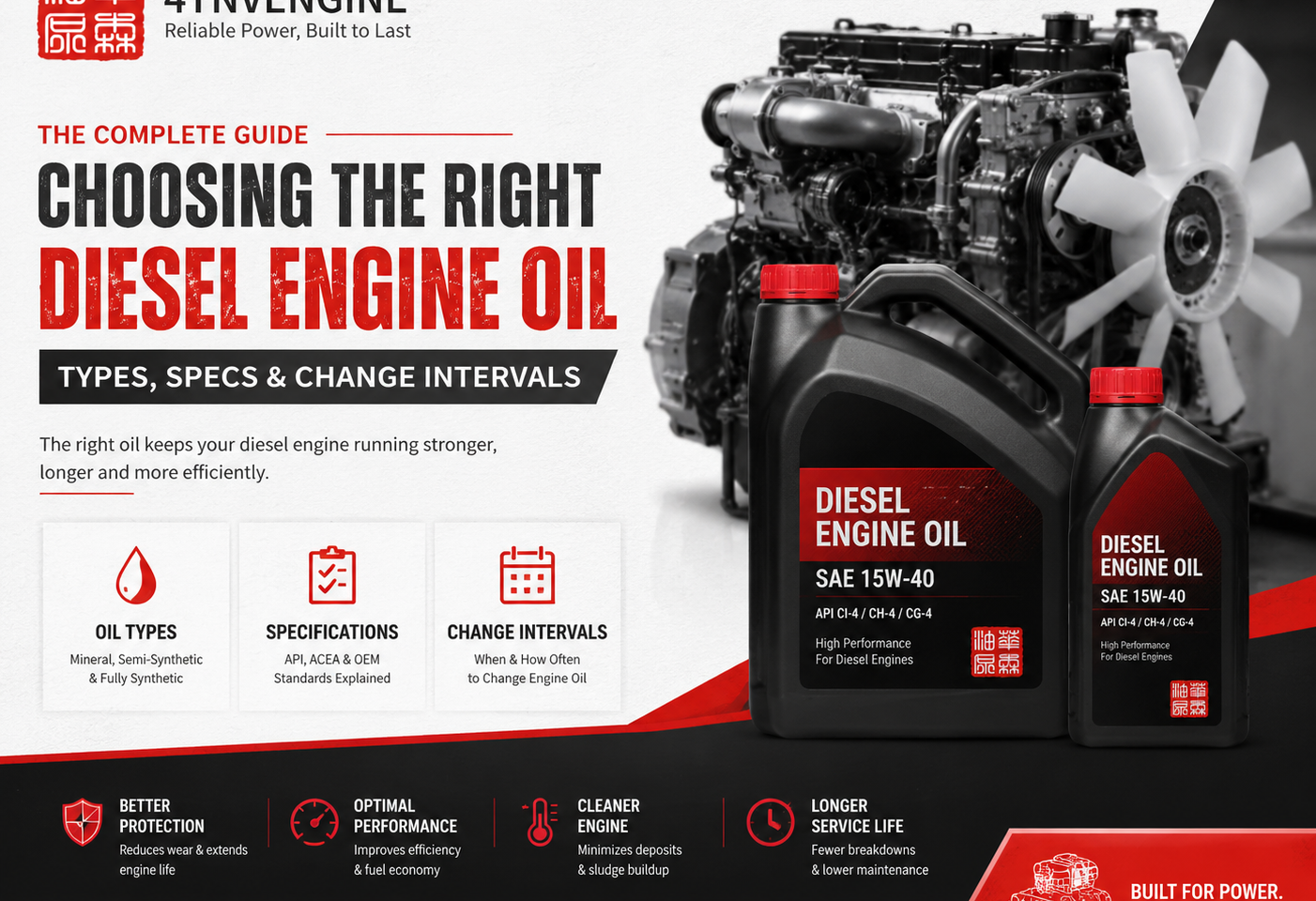
Choosing the Right Diesel Engine Oil: Types, Specs & Change Intervals
You can buy the best diesel engine on the market, run it on the right fuel, and maintain every component with precision – and still kill it slowly by choosing the wrong oil. It’s not dramatic. It’s just chemistry working against you, one heat cycle at a time. If you operate diesel-powered equipment – whether that’s a fleet of commercial trucks, agricultural machinery, or industrial generators – what goes into the crankcase matters more than most operators realize. This guide cuts through the label noise and gives you exactly what you need to make the right call.
Why Diesel Engine Oil Isn’t the Same as Regular Motor Oil
Before anything else, this distinction needs to be clear. Diesel engines generate more combustion products – acid blow-by gases and soot – than petrol engines. Petrol engine oil isn’t designed to cope with that degree of contamination. Diesel engine oil has more detergents, dispersants and alkalis to neutralize acids and keep soot in suspension until your next oil change. The wrong type of oil doesn’t just decrease performance; it increases wear of rings, bearings and cylinder walls in a way that won’t become apparent until it’s too late.
The Three Main Types of Diesel Engine Oil
Knowing what you have to choose from is the first step. There are three main types:
Conventional (mineral) oil is produced from crude oil. It’s the cheapest and works well in older diesel engines with loose tolerances. But it degrades quickly at high temperatures and needs to be changed more often.
Synthetic oil is created at the molecular level with uniform viscosity and heat resistance. It provides better cold starts, high-temperature stability and longer oil change intervals. Full synthetic is the oil of choice for today’s tight-tolerance diesel engines with turbocharging.
Semi-synthetic (blended) oil is a compromise between the two: it has superior protection over pure mineral oil but is cheaper than full synthetic. This is a good choice for dual-purpose or fleets in transition where the cost of full synthetic can’t be justified for all engines.
Decoding the Specs: What Those Numbers and Letters Actually Mean
Oil specifications aren’t random. They detail what the product is designed to do, and using an oil that’s not rated for your engine is a recipe for warranty issues and engine wear.
The two key ratings for diesel engine oils are:
API (American Petroleum Institute) ratings – Look for “CK-4” or “FA-4” on the label. CK-4 is the newest rating for most heavy-duty diesel engines, with better oxidation stability and shear stability. FA-4 is used for new engines operating at lower viscosities for increased fuel economy.
ACEA (European Automobile Manufacturers’ Association) ratings – These are prevalent on European equipment with E6, E7 and E9 being the classifications that apply to heavy-duty diesel engines. E9 is recommended for today’s low-emission engines. Engine OEMs specify viscosity grades which include 15W-40 and 5W-30, as their standards. You need to select the correct oil for your climate because oils that work in hot conditions will not operate properly during winter cold starts.
Engine Oil Change Intervals
The old “every 3,000 miles” rule is outdated and wasteful. Today’s diesel engines – particularly those using high-quality synthetic oil – can safely change engine oil at higher intervals. But change intervals vary.
There are a number of variable factors that affect change intervals:
Duty cycle – Severe or heavy cycles, high temperatures and high dust loads degrade oil more rapidly than easier cycles
Oil quality – 100% synthetic may allow longer drain intervals (10,000-15,000 miles) in ideal conditions; mineral oil may need to be changed every 5,000-7,500 miles
Engine condition – Older engines with more blow-by will accelerate oil degradation, shortening the drain interval regardless of oil type.
Original equipment manufacturer (OEM) recommendations – Always use the OEM-recommended drain interval as the starting point, but modify based on conditions and oil analysis.
Conclusion
Every diesel engine has a tolerance threshold. Exceed this tolerance with the wrong oil specification, the wrong oil viscosity, or the wrong oil change interval – and it won’t warn you. It’ll just stop. The best strategy requires you to select oil according to your engine’s operational needs while following a schedule based on factual information, and you must stop seeing lubrication as a secondary concern. At 4tnvengine, we provide reliable solutions and support to keep your diesel engine running at its best. Our range of products are available to you to test and use to meet your business needs. It’s your engine’s future that’s at stake.
FAQs
What will happen if we use the wrong oil in our diesel engine?
The wrong oil fails to protect against soot buildup, acid neutralization, and heat stress. The equipment will experience accelerated damage.
Can I use 5W-30 instead of 15W-40 in my diesel engine?
It really depends on your OEM requirements and the temperature at which you run the engine. Using a low-viscosity oil under extreme heat and load will compromise the oil film strength and increase metal-on-metal wear.
How will I know when to change my diesel engine oil?
The best way to determine if your oil should be changed is to conduct an oil analysis test. The oil analysis test provides the most precise results because it evaluates oxidation levels together with metal content and remaining additive lifespan.
Is it worth using synthetic oil in old diesel engines?
Synthetic oil provides better cleaning power than other oils because it can dissolve engine sludge, which causes older engines to develop seal leaks because sludge has filled gaps.