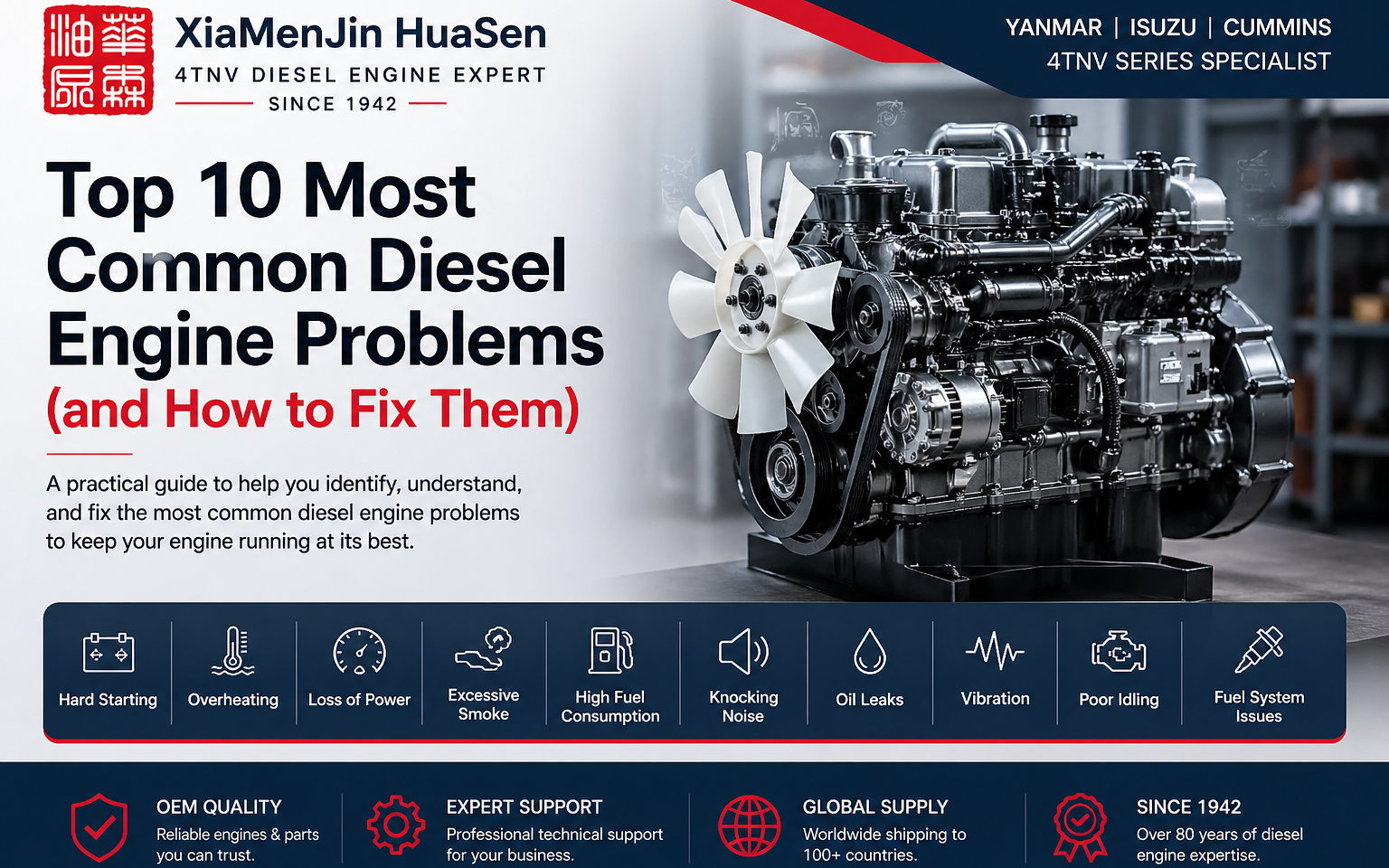
Top 10 Most Common Diesel Engine Problems (and How to Fix Them)
Many business activities are supported by diesel engines that provide power to trucks, generators, and industrial machines. Diesel engines demonstrate exceptional durability together with efficient performance, yet they eventually develop faults that cause operational problems. Businesses can reduce their financial losses, which result from equipment downtime, by learning about typical issues and their respective solutions.
This article presents the most widespread diesel engine issues together with effective methods to resolve each one.
Common Diesel Engine Problems and How to Fix Them
Unexpected diesel engine issues can quickly disrupt productivity at businesses which require nonstop operations. The majority of problems in this system can be detected through proper methods, which allow for early identification and subsequent resolution.
1. Hard Starting or Failure to Start
The diesel engine starting problem occurs because of three main components, which include defective glow plugs, insufficient battery power, and obstructed fuel filters.
Fix: Check and change defective glow plugs, charge battery, and clean or change fuel filters. Frequent servicing minimizes the repeat starting problems.
2. Excessive Smoke Emission
The exhaust system emits three different types of smoke, which include black smoke, blue smoke, and white smoke, to show various engine problems. The presence of black smoke indicates an excessive fuel flow, while blue smoke shows that the engine burns oil, and white smoke indicates a coolant leak.
Fix: Inspect fuel injectors for proper operation, check for oil leaks, and verify coolant levels. The use of cleaning or replacing injectors will frequently fix the problem of excessive smoke emissions.
3. Overheating
The diesel engine operates at high temperatures, which make it susceptible to overheating problems. The system experiences failure when coolant levels drop and radiators become blocked and thermostats start to malfunction.
Fix: Regularly monitor coolant levels, flush radiators, and replace malfunctioning thermostats. The system prevents overheating when operators maintain proper airflow together with clean cooling systems.
4. Fuel Contamination
Diesel fuel contains water or debris that may destroy fuel pumps and injectors, resulting in performance issues in the engine.
Fix: Check with quality fuel, install fuel water separators, and drain filters on a regular basis. Costly repairs can be prevented by preventative measures.
5. Injector Problems
Defective injectors may result in rough idling, misfires, or poor acceleration. Diesel injectors are very accurate parts, and any slight problems can affect the work of the engine.
Fix: Clean or repair faulty injectors. Professional servicing guarantees proper calibration to achieve optimum fuel delivery.
6. Turbocharger Failure
Turbocharged diesel engines can suffer from power loss or excessive smoke as a result of aged bearings, oil spills, or clogged air filters.
Fix: Check the turbochargers, change air filters, and be sure that the lubrication is correct. The earlier the issues are addressed, the better the engine will be spared.
7. Low Oil Pressure
The case of low oil pressure may result in serious engine damage unless promptly corrected. The main causes are worn bearings, oil leaks, or clogged oil filters.
Fix: Keep an eye on the oil levels, change the filters frequently, and replace worn-out engine parts in time. High-quality diesel engine oil is used in order to ensure efficiency in lubrication.
8. Exhaust Gas Recirculation (EGR) Valve Problems.
Clogged EGR valves create engine performance problems because they lead to warning light activation and higher emissions production.
Fix: Periodically clean or replace EGR valve. With the help of proper maintenance, there is adherence to emission standards and the proper functioning of the engine.
9. Cooling System Leaks
Hose, gasket, or radiator leaks may result in decreased cooling performance and overheating.
Fix: Check the hoses and gaskets periodically, change the damaged ones, and maintain the radiator cleanly. Maintenance is proactive and does not cost much.
10. Engine Knocking
Timing, poor-quality fuel, or the presence of carbon in the combustion chamber can be detected by the knocking or other noise during the engine.
Fix: Use recommended diesel fuel, clean the combustion chambers, and check engine timing. Regular maintenance assists in the smooth running.
Keeping Your Diesel Engine Reliable
Unexpected diesel engine problems can be prevented through dedicated maintenance work. Your engines maintain optimal performance through regular inspections and high-quality fuel and scheduled oil changes and correct maintenance procedures. Diesel equipment operators achieve time savings and lower repair expenses and stable operations through their investment in preventive maintenance.
Consult a certified diesel engine service provider when your diesel engine keeps experiencing the same problems. Your business operations continue through professional assistance, which protects your fleet and machinery from downtime costs.
Conclusion
Diesel engine problems become easier to handle when they undergo early detection and treatment. The majority of engine problems, from injector faults through to overheating, can be avoided through regular maintenance together with high-quality engine components. The operational efficiency of businesses improves because they experience reduced interruptions throughout their activities.
Working with experienced diesel engine suppliers like 4tnvengine provides businesses with dependable components and essential technical assistance during critical times. 4tnvengines provide various types of diesel engines. By adopting the appropriate strategy and having reliable collaborators, keeping the performance of diesel engines is a simple and inexpensive task.
FAQs
What is the most common diesel engine problem?
One of the most well-known problems of the diesel engine is hard starting, which is normally caused by weak batteries, defective glow plugs, or even blockages in the fuel system.
How can I tell if my diesel engine injectors are failing?
Symptoms of defective injectors comprise coarse idling, ineffective fuel economy, too much smoke, and engine misfires. Performance can be restored by timely cleaning or replacement.